
Thousands of deer flood the streets of a Japanese city
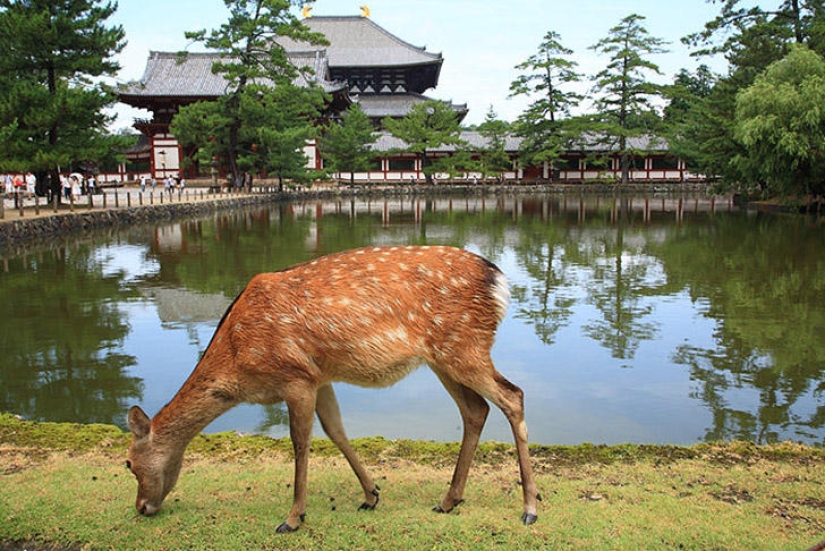
Nara is an ancient Japanese city with a rich history, which was once the capital of the Land of the Rising Sun. Numerous sights, ancient temples and other buildings that attract tourists and pilgrims have remained from their former greatness. But the main attraction of the city is its spotted deer, which are declared sacred animals here.
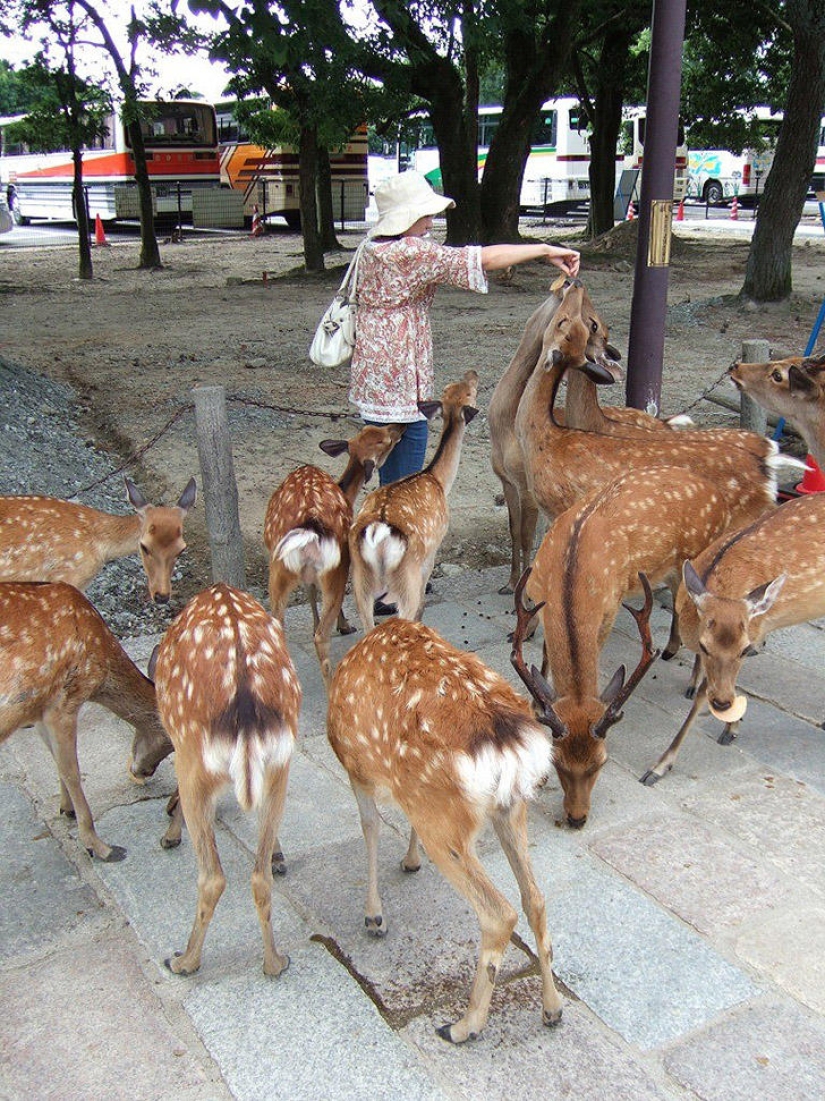
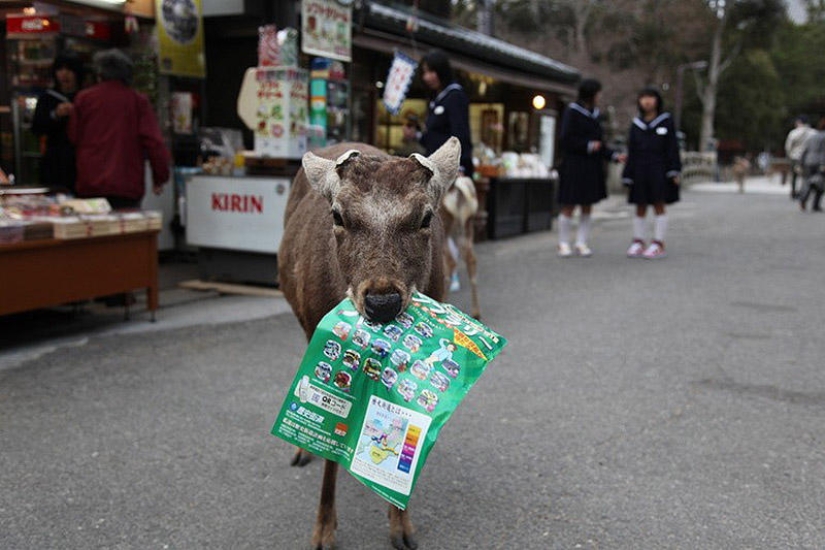
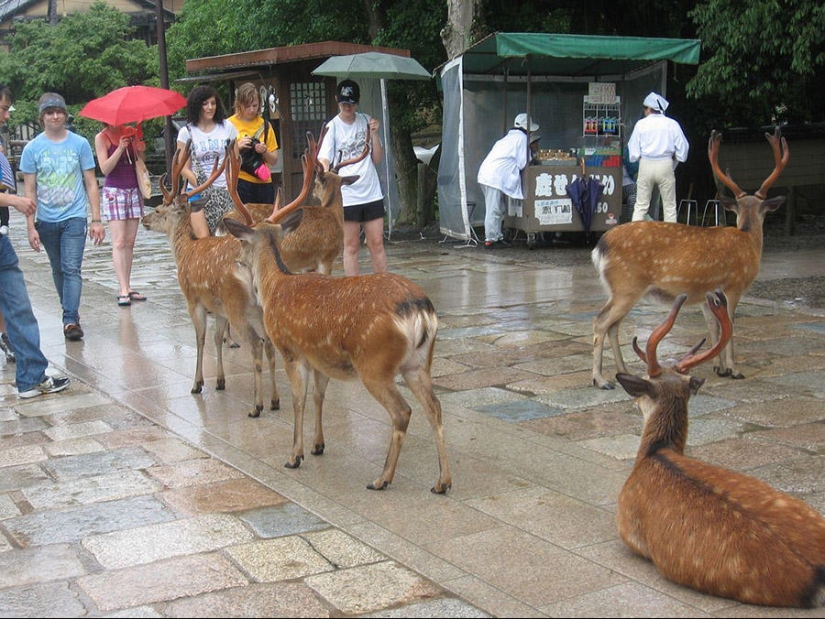
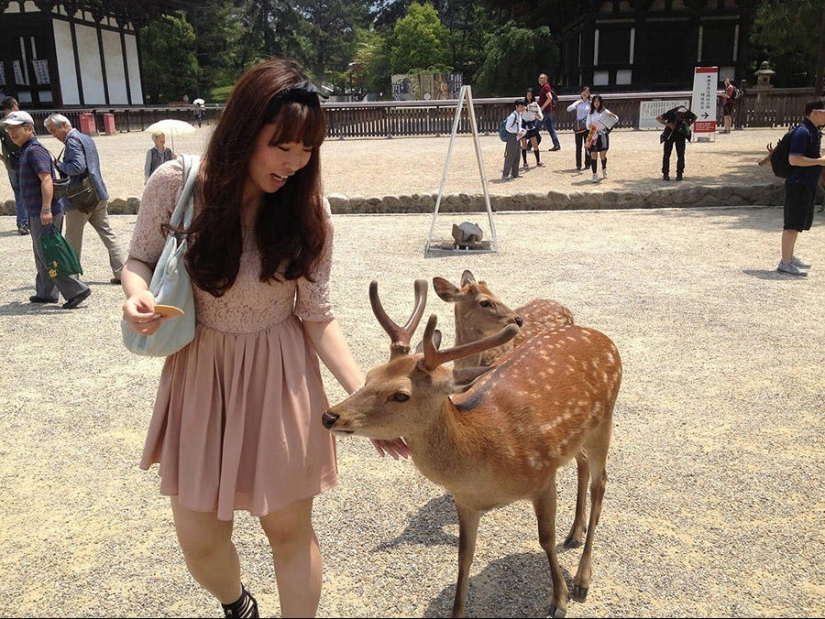
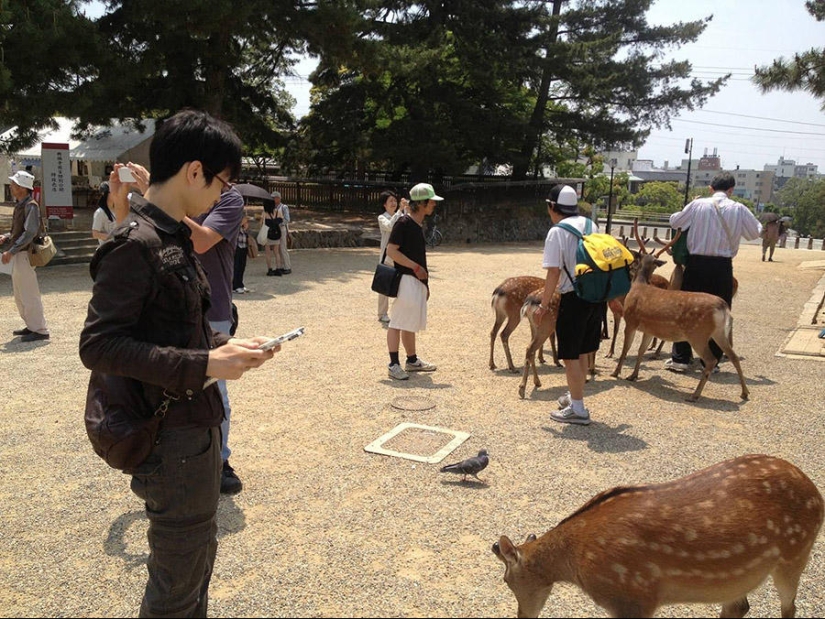
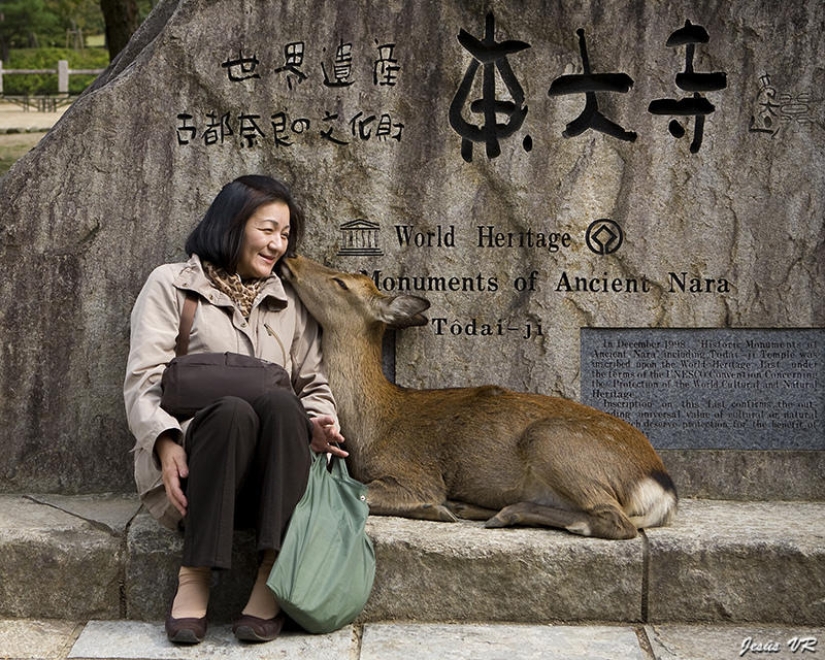
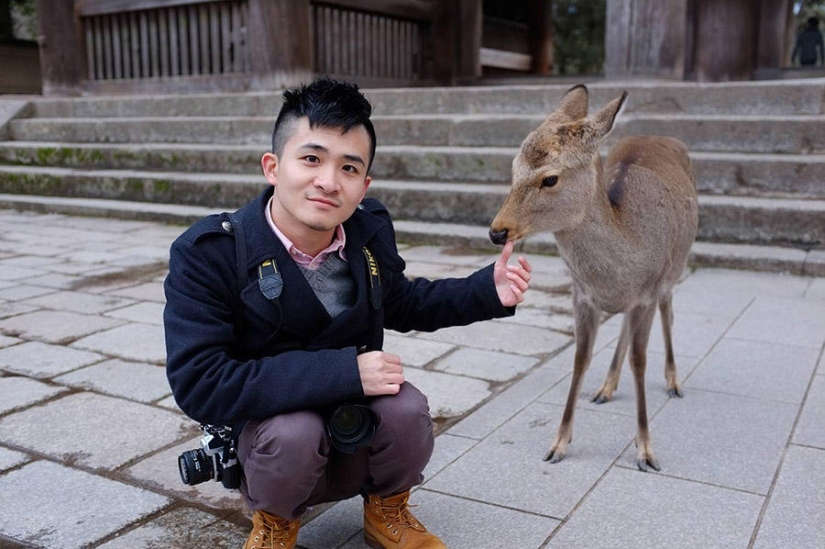
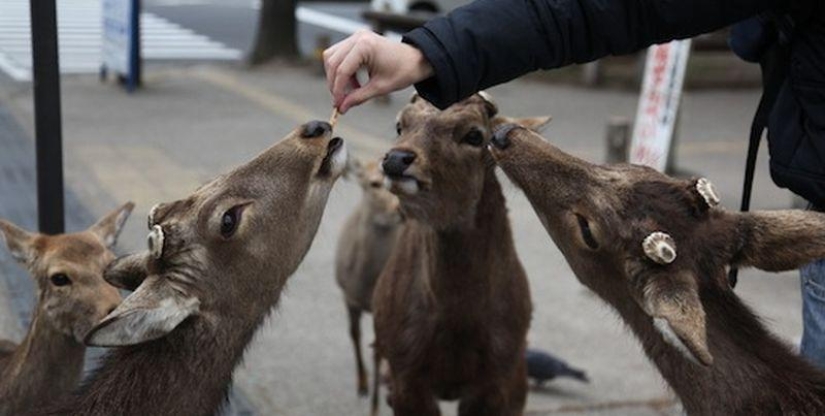
Now there are about 1,200 lazy, well-fed deer in Nara, who roam the streets of the city in herds and cheekily poke their muzzles (or hooves) at tourists, waiting for handouts: special crackers are sold everywhere for deer.
(23 photos in total)
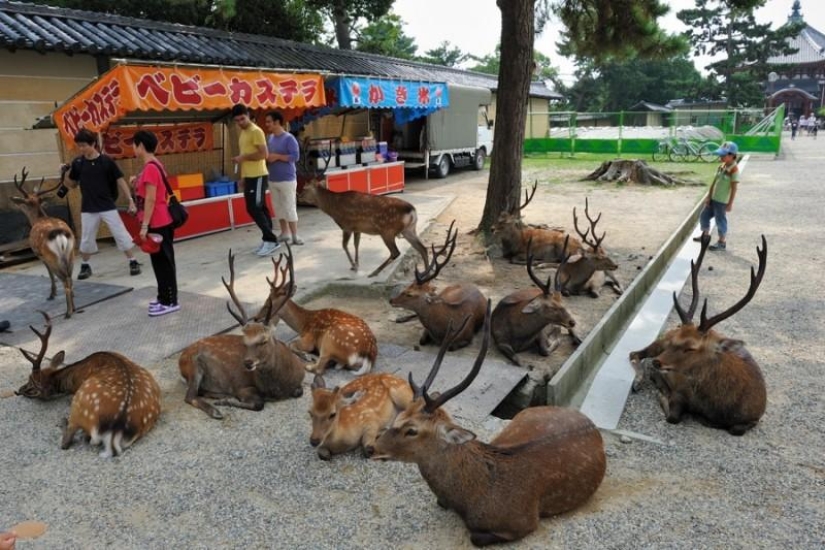
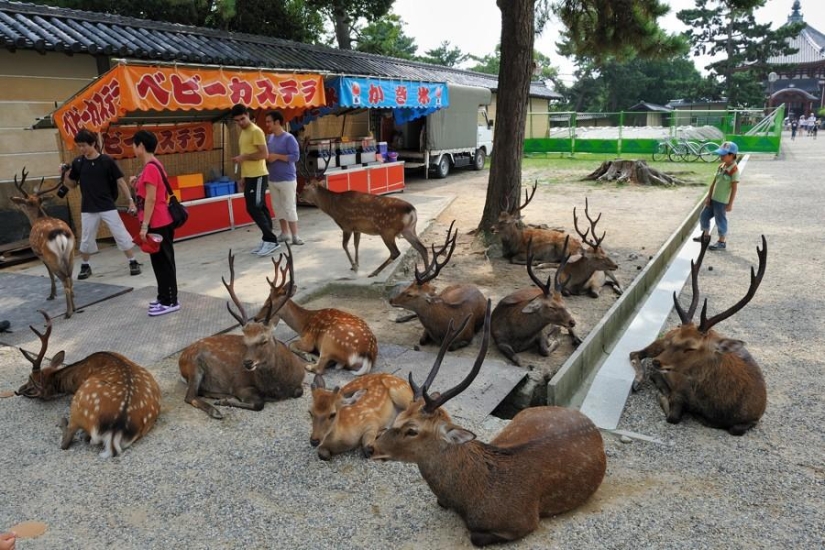
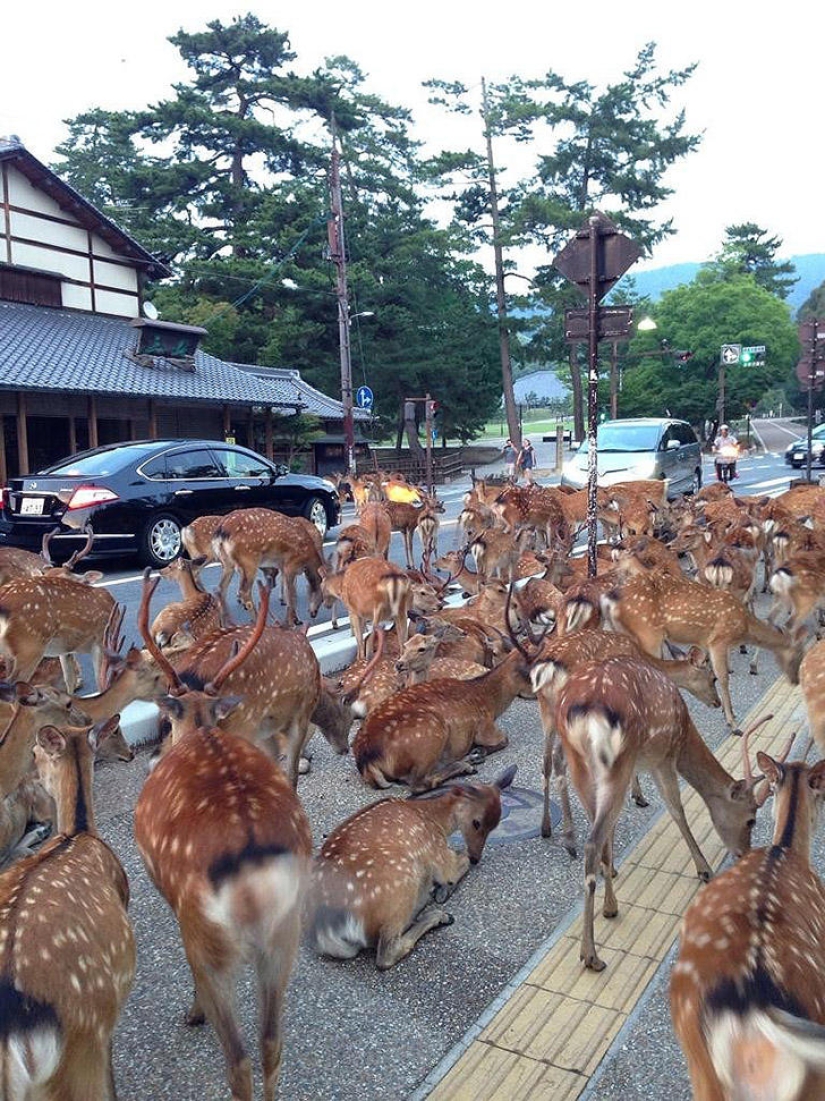
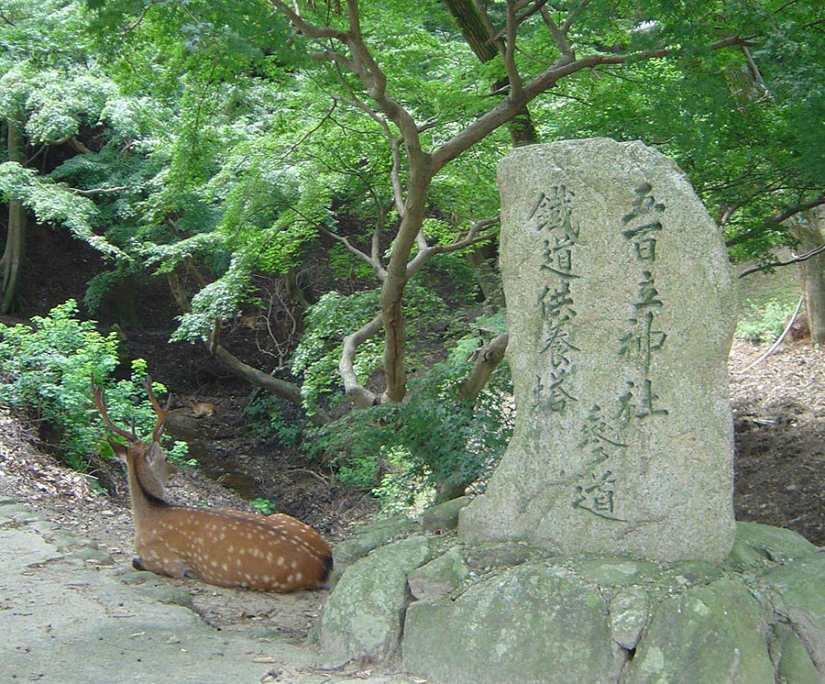
1. Animals walk around the city by the hundreds, and no laws are written to them. It is impossible to drive a sleeper away even from the highway. It should be carefully avoided.
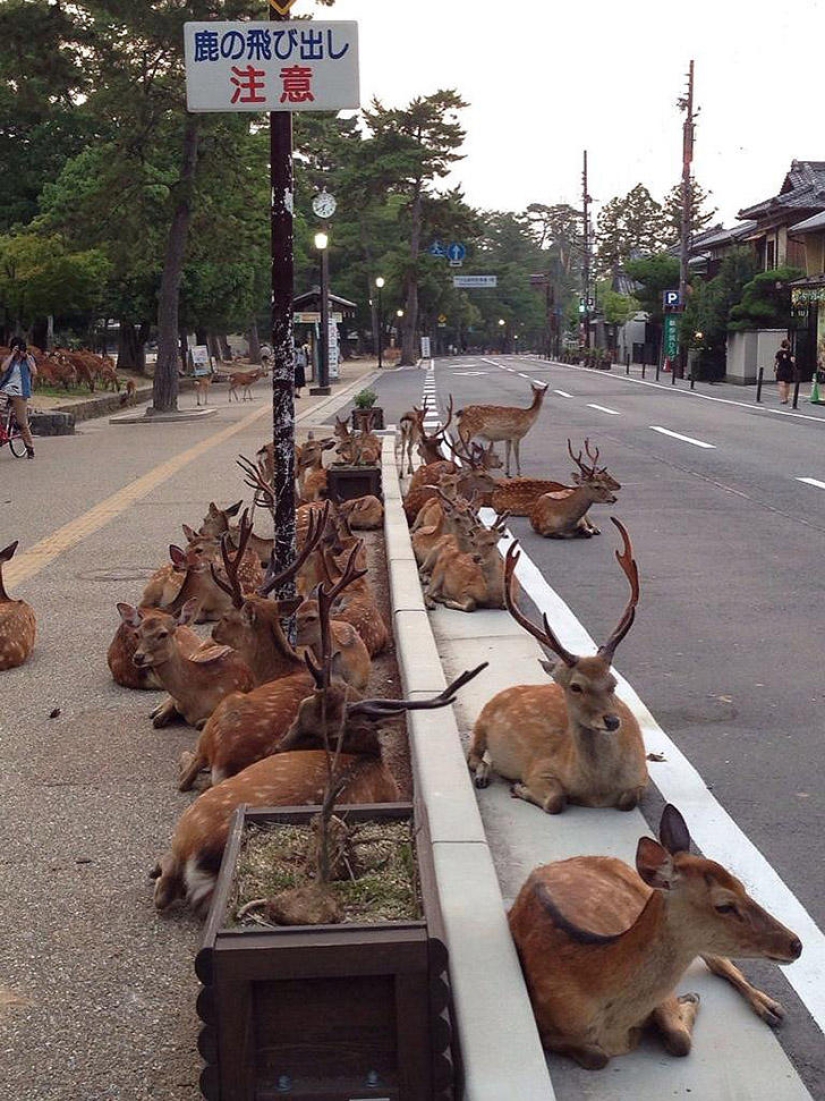
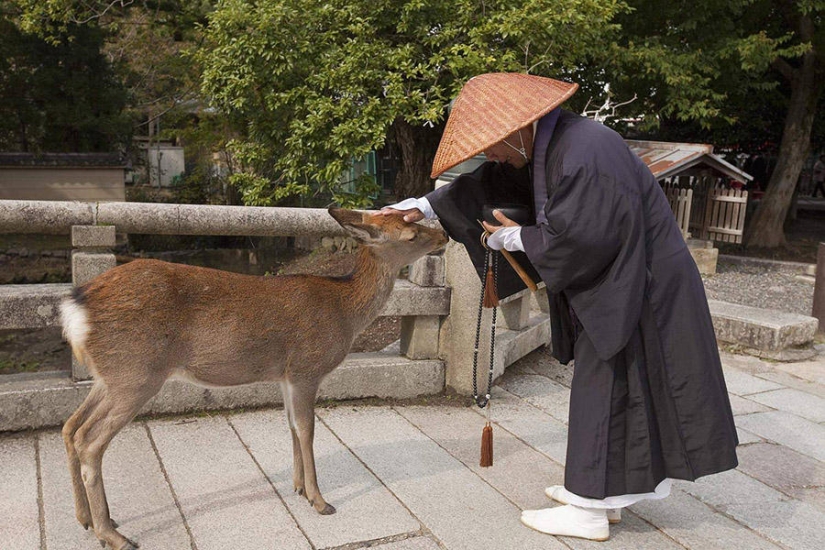
2. The fact is that residents have been observing the rule for more than a thousand years. According to one legend, all the local artiodactyls are descendants of the mythical deer on which the first emperor of Japan descended from heaven. The only thing that is allowed is to buy them healthy and nutritious food.
3.
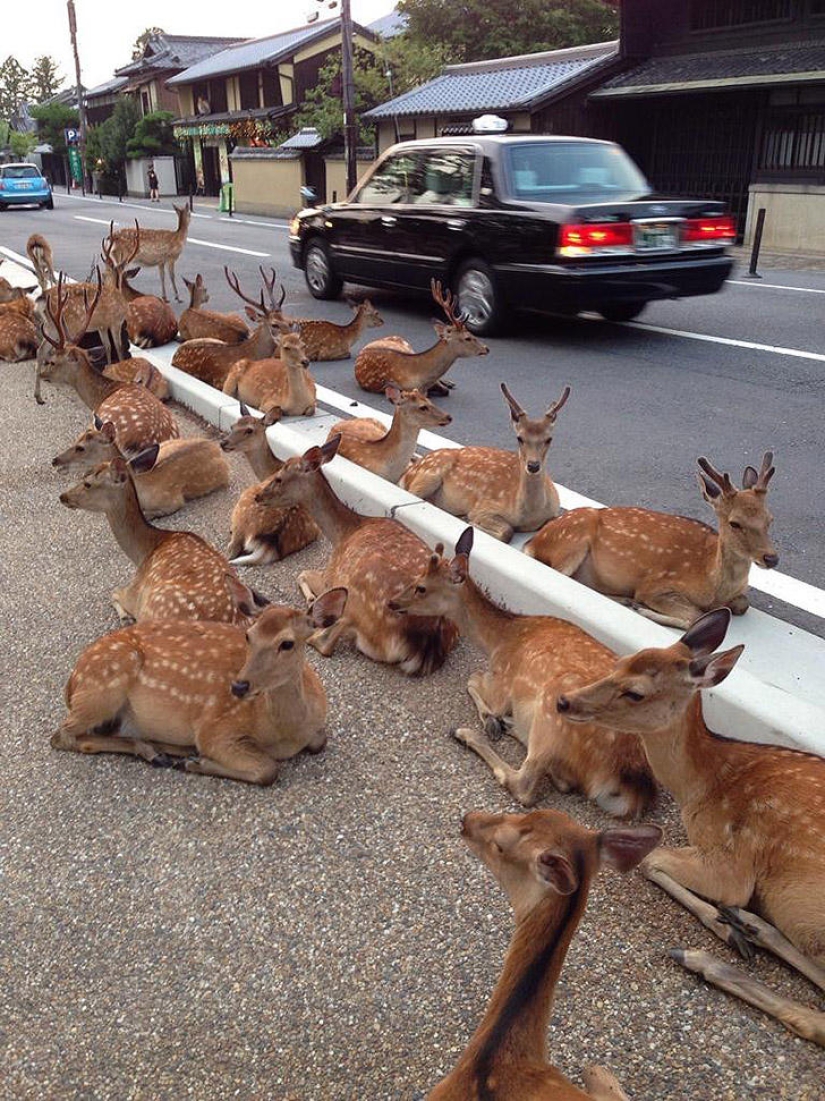
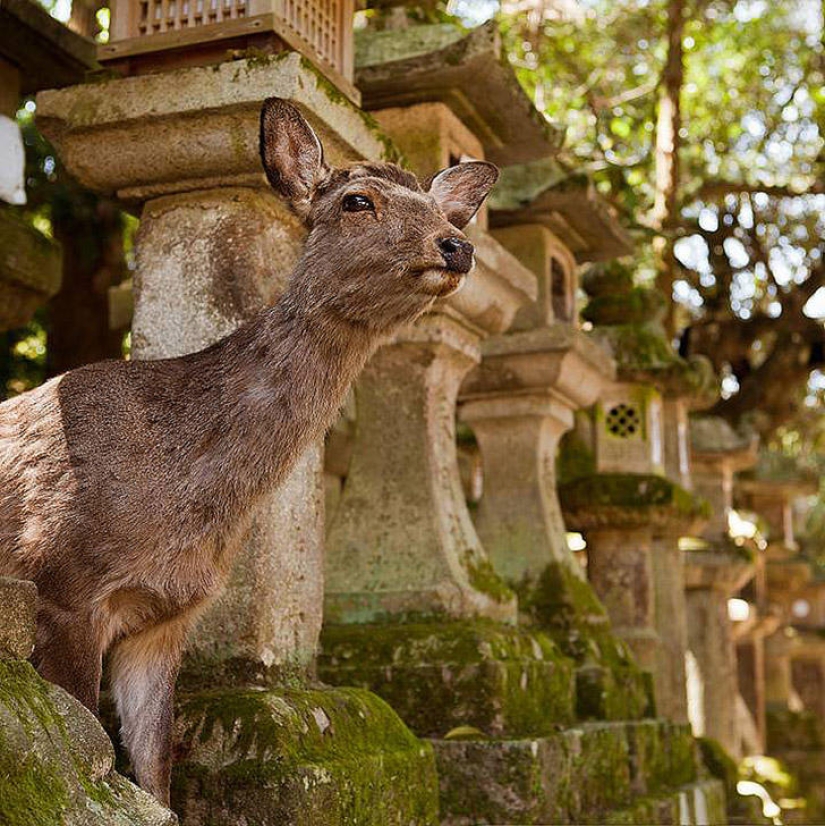
4. According to legend, after the proclamation of Heijo-kyo (the old name of Nara) as the capital of Japan, the god of the Kasuga Taisha sanctuary arrived to defend this city on a white deer. Since then, deer are considered to be messengers of the gods, protecting the city and the country.
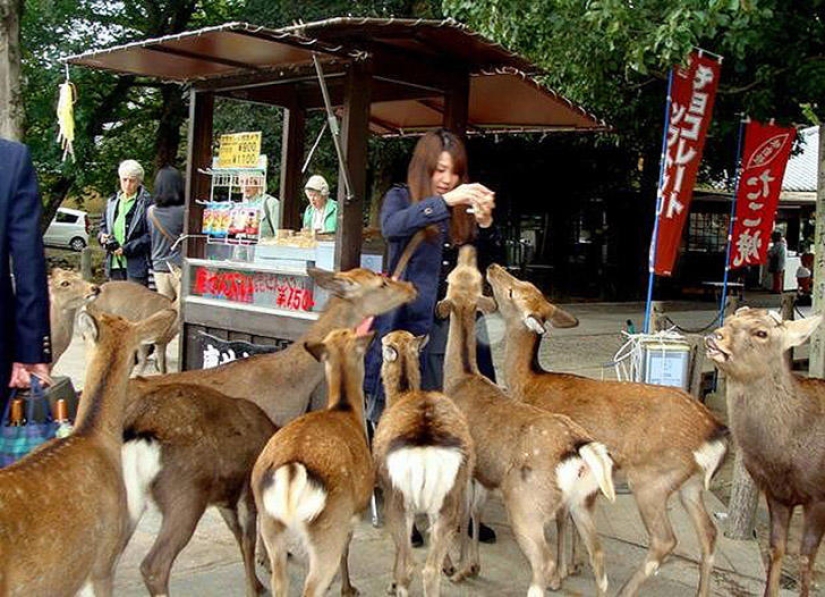
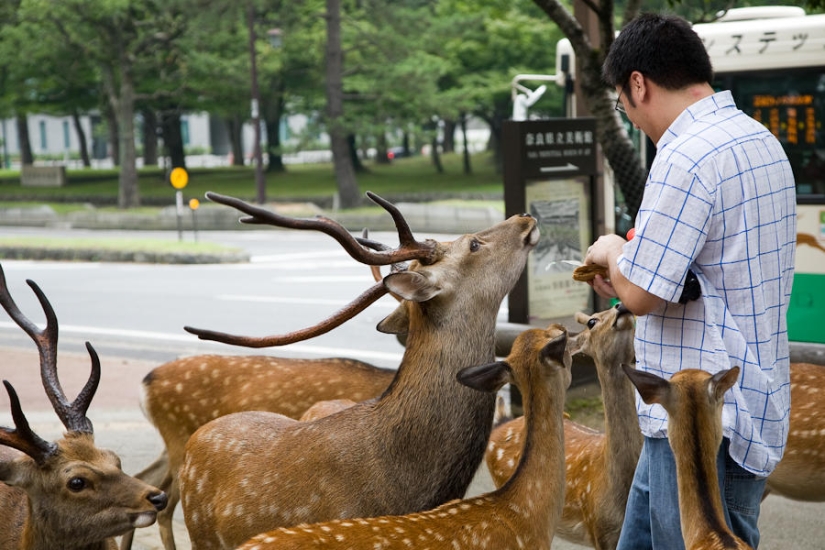
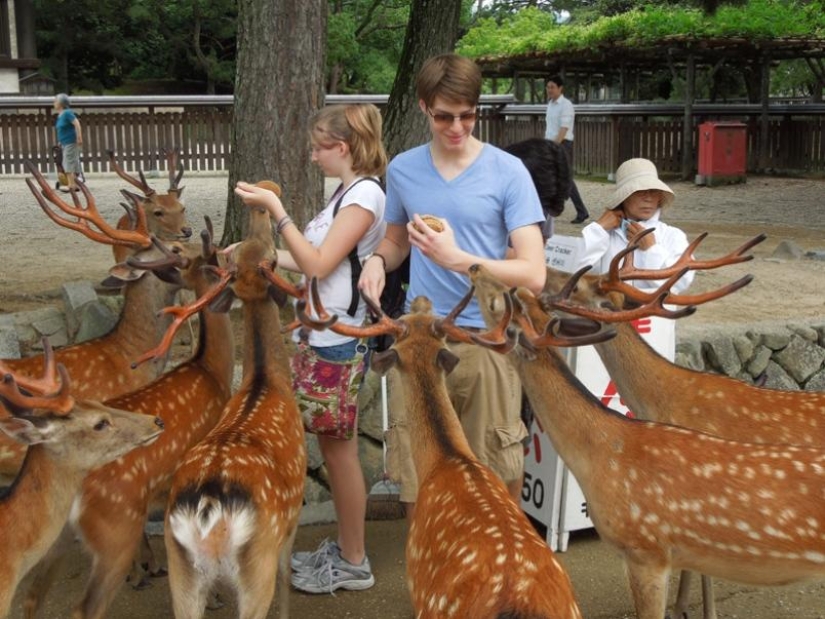
5. It is written in the guidebooks that there are 2000 deer there. They really come across at every turn. And near every shop with sika-senbei (deer cookies), they crowd, surround tourists and crave these cookies. Leaves from trees or grass from deer have not been considered food for a long time compared to sika senbei.
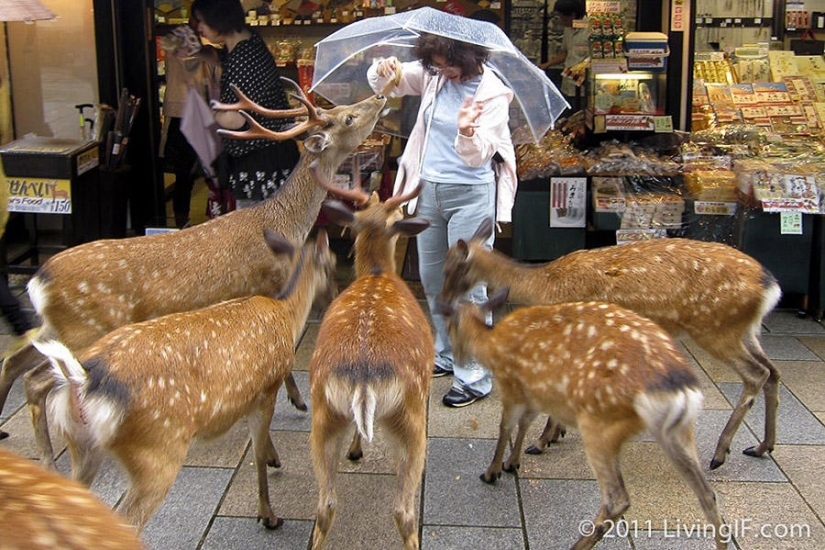
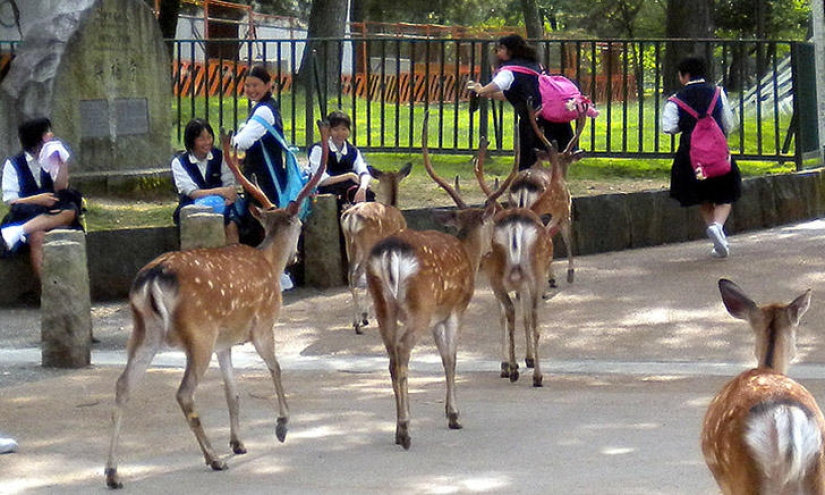
6. As soon as someone buys cookies, the deer begin to beat off these cookies. Animals approach from all sides, push each other away, fight for cookies, snatch it out of their hands. If they had horns, the deer would hurt each other. But deer don't always have horns.
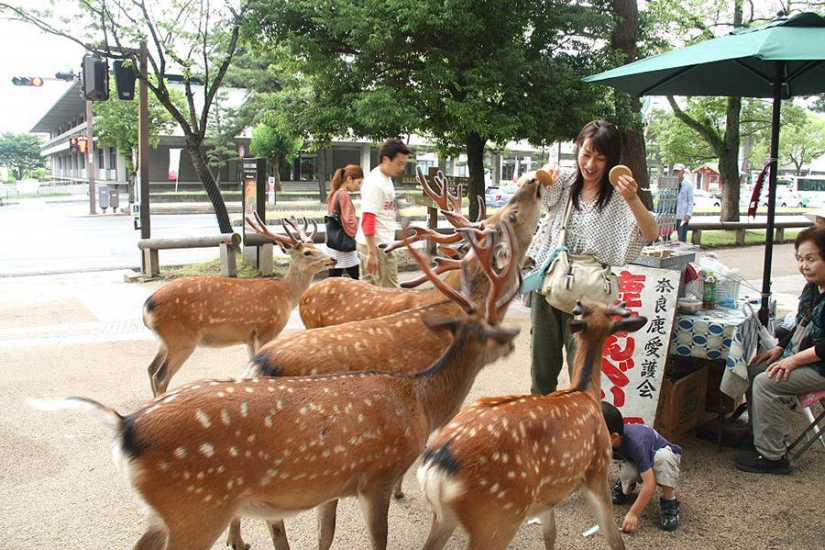
7. Every year in October, a special Shika-no-tsunokiri festival takes place in Nara. On this day, all deer that have had time to grow horns are caught, and the horns are removed.
8. Another tradition is associated with these deer. At the end of winter, when there is too little food, the deer are especially fed. They are invited to lunch by a musician playing Beethoven's 6th Symphony on a horn. This tradition has existed since 1892 and was interrupted only during the Second World War, but was restored in 1949. On February 11, 1979, the famous Italian trumpeter Nini Rosso set up an experiment and played them the 6th symphony not on a bugle, but on a trumpet, but the deer recognized a familiar melody and came out to him from the thicket.
9.

10.
11.
12.
13.
14.
15.
16.
17.
18.
19.
20.
21.
22.
23.
Recent articles

It's high time to admit that this whole hipster idea has gone too far. The concept has become so popular that even restaurants have ...

There is a perception that people only use 10% of their brain potential. But the heroes of our review, apparently, found a way to ...
Related articles

On the eve of the New Year, a magical atmosphere reigns in every house — everything is hung with shiny tinsel, there is an ...

Yuuki Morita is a promising young sculptor and artist from Japan. The source of inspiration for him was nature, its diversity and ...

Beautiful decoration of dishes is no less important than its taste. People first "eat" with their eyes, and only then try what is ...
New Year's is a time to surprise and delight loved ones not only with gifts but also with a unique presentation of the holiday ...