
Like a bunch of orange peels changed the ecosystem in Central America
In 1996, environmentalists Daniel Janzen Winnie Hallwachs addressed to the manufacturer of orange juice Del Oro with an unusual request: to donate the waste. Then peel and pulp of oranges substandard unloaded at the station, at that time more resembled a field of hostilities: it was deserted and deforested territory of a national Park in Central America.
In that place was established a special mark and then forgot about it for 16 years. But nature all the time "worked", and a bunch of orange peels changed the ecosystem.
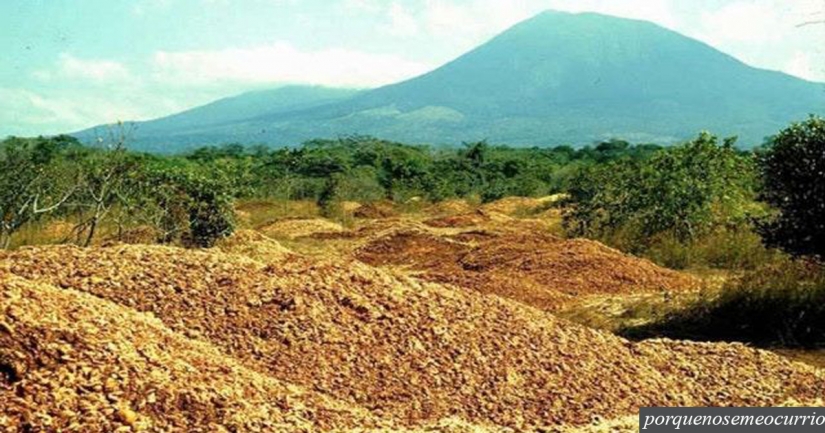
Photo above taken immediately after the importation of 12 tonnes of orange compost. Ecological experiment in the national Park of Guanacaste in Costa Rica has begun. Thus, scientists from the University of Pennsylvania tried to improve the condition of the soil in that part of the Park, which has suffered from fire and overgrazing.
Soon, however, the company TicoFruit, rival Del Oro, sued, saying that this "experiment" leads to contamination of the Park. The project was closed. And in 2013 alone, the researchers decided to look at the results of his experiment.
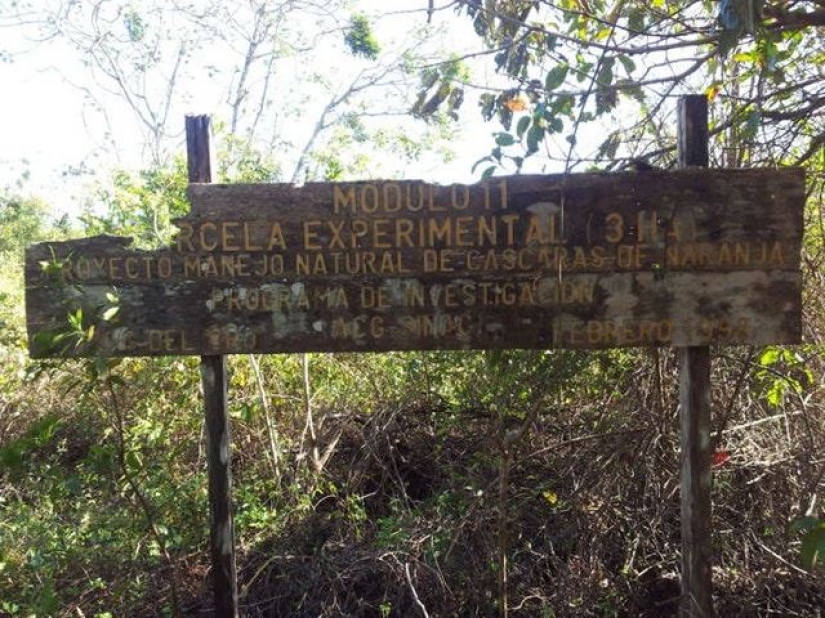
First reset crusts sent his student Timothy. "You will see there is a big yellow sign, — he explained to the environmentalists. — It will be hard to miss." Arrived on the scene, Timothy mark was never found. Getting on the phone more detailed instructions, he made sure that everything was in the right place. Just it was impossible to know.
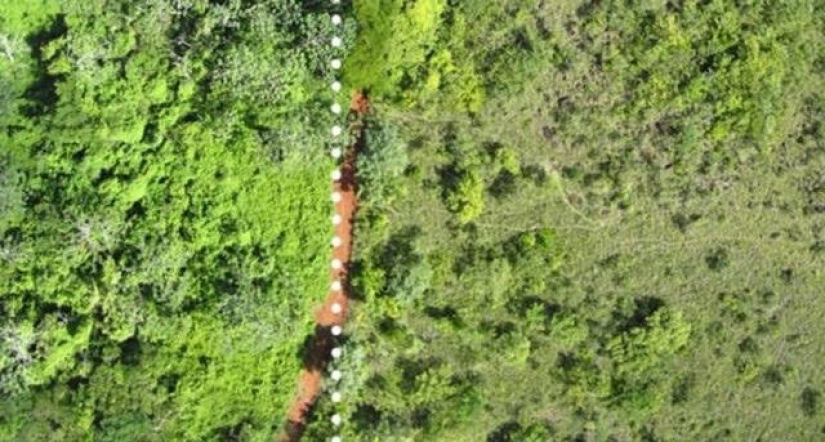
Scientists have discovered an amazing thing: at first a barren soil covered with dense forest. To the left of the slash is the area where the discarded peel.
The landfill site covered with dense forest. And if in neighboring fields, the vegetation was almost absent here had to literally Wade through the tropical undergrowth.
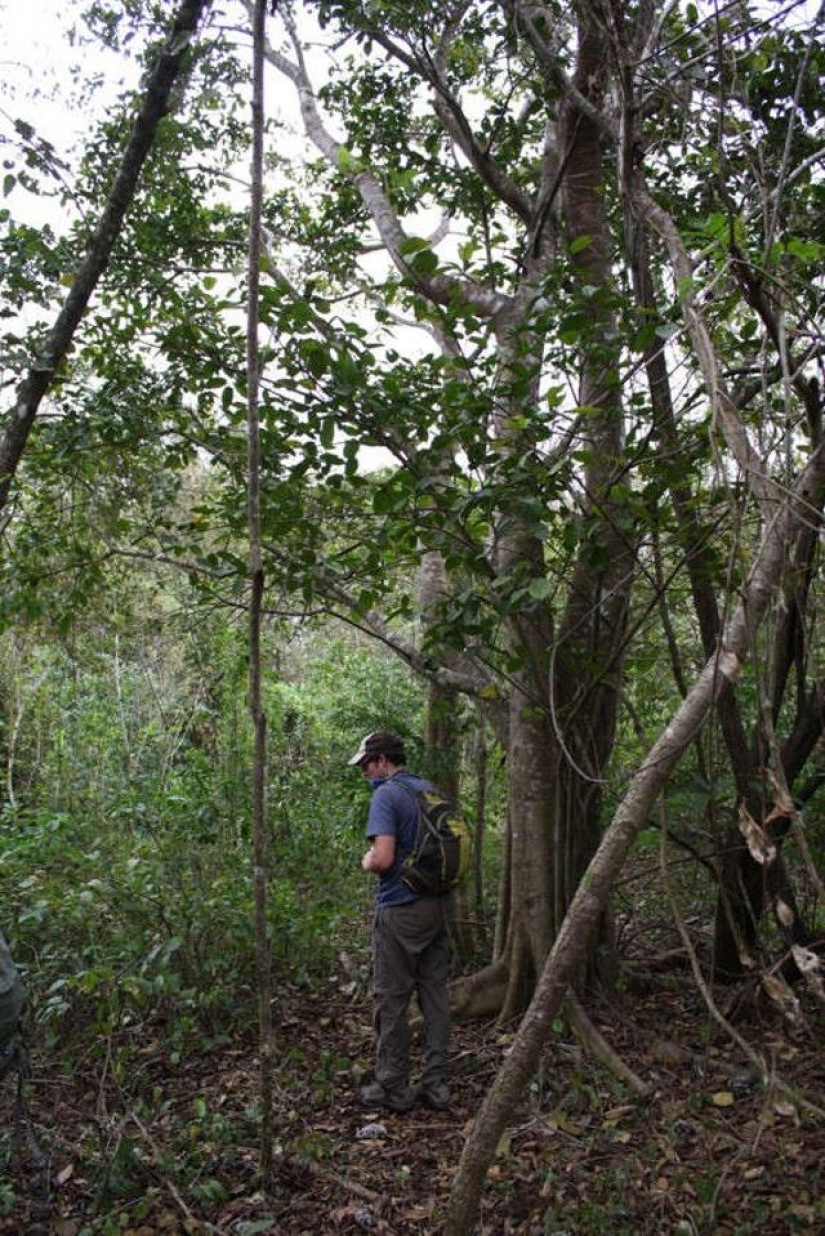
As it later turned out, where in 1996 he unloaded waste increased by 176% more trees than in the adjacent field.
The following three years, researchers at Princeton University studied the changed area and compared the earth that is not covered with compost. The results were published in the journal Restoration Ecology. On the neighbouring plot, where there is orange peel, there was only one dominant tree species. Where was Corky, grew thousands of species of plants. The result of the study were the following: secondary forest germination is critical for slowing climate change.
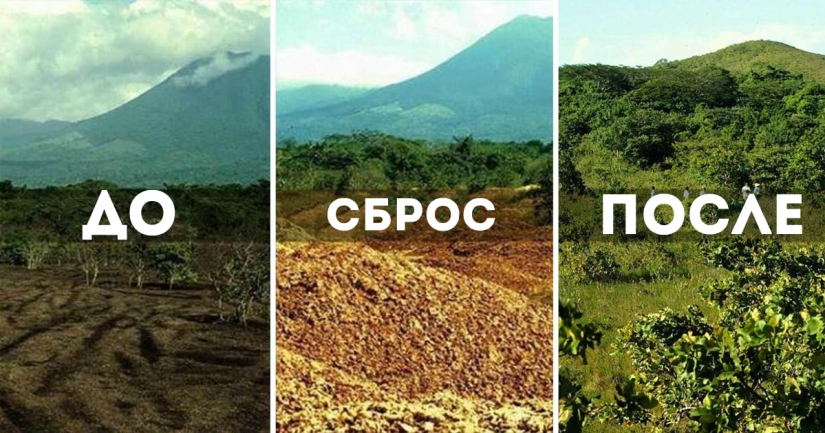
So this place looked in the national Park of Guanacaste before and after the experiment.
So randomly managed to find a way to use industrial waste in order to return to the rainforest.
Keywords: Costa Rica | National Park | Then and now | An experiment
Post News ArticleRecent articles

It's high time to admit that this whole hipster idea has gone too far. The concept has become so popular that even restaurants have ...

There is a perception that people only use 10% of their brain potential. But the heroes of our review, apparently, found a way to ...
Related articles

The age of breeding" improvements " of pure breeds has turned once healthy dogs into deformed animals. There is an opinion that ...

That looked like famous actors of the Soviet screen in the childhood years. Unfortunately, many archived images are preserved not ...

Yellowstone is the first national Park in the world and also the largest of all national parks in North America. For nearly 150 ...
New Year's is a time to surprise and delight loved ones not only with gifts but also with a unique presentation of the holiday ...