
How to assess the strength and intensity of earthquakes
Categories: History | Science | World
PictolicOn January 30, 1935, the American seismologist Charles Richter proposed a new way to describe the power of earthquakes, known today as the Richter scale. Many scientists before and after Richter developed and offered their own criteria for evaluating aftershocks to the public, in our article we will consider the most famous among them.
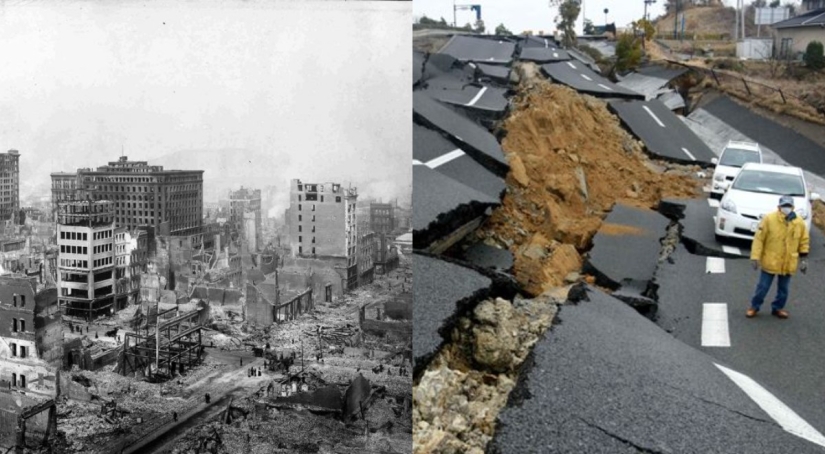
To begin with, the Richter scale is often confused with the earthquake intensity scale in points and similar systems. The key difference between them is in the evaluation criteria: the magnitude – the energy of aftershocks is measured by Richter, and the intensity of an earthquake is characterized in points, depending on its impact on people, animals and objects surrounding them.

Charles Richter
To estimate the magnitude, Richter proposed using the decimal logarithm of the movement of the seismograph needle, taking into account the correction function, depending on the distance from the device to the epicenter of the earthquake. The original Richter scale was not perfect — firstly, the capabilities of the equipment of that time limited its value to 6.8 units, and for the accuracy of the readings, the seismograph had to be located at a distance of no more than 600 km from the epicenter of the tremors. Secondly, the scale was focused only on surface earthquakes, which were typical for southern California, and with deep tremors, a completely different picture is observed.

Since then, many modifications of the Richter scale have been made taking into account the features of earthquakes, today there are several derived magnitude scales, including surface and volume waves – for remote or surface and for deep earthquake foci, respectively. The logarithmic scale corresponds to numerical values from 1 to 9.5. There are no units of designation for the magnitude, because phrases such as" earthquake with a magnitude of 6 points " are incorrect.
It is also worth mentioning that an increase in the magnitude index by 1.0 corresponds to a tenfold increase in the amplitude of the ground vibration, and the energy in the earthquake center increases tenfold, because an earthquake with a magnitude of 5.0 will manifest much more serious damage on the surface than with a magnitude of 4.0.

A more modern and universal scale is the seismic moment scale, developed by seismologist Hiro Kanamori in 1977. Even the updated derivatives of the Richter scale do not display real indicators for stronger aftershocks with a large area of geological faults. The key criterion for evaluating the Kanamori scale is the seismic moment. It is determined by the shear deformation of rocks and the area where geological faults are found. Another difference between the Kanamori scale and the Richter scale is that the latter displays the magnitude of each tremor, and the Kanamori estimates the total energy released during the movement of rocks. That is, several consecutive earthquakes on the scale of the seismic moment are defined as one continuous phenomenon, and the magnitude indicator will be averaged.
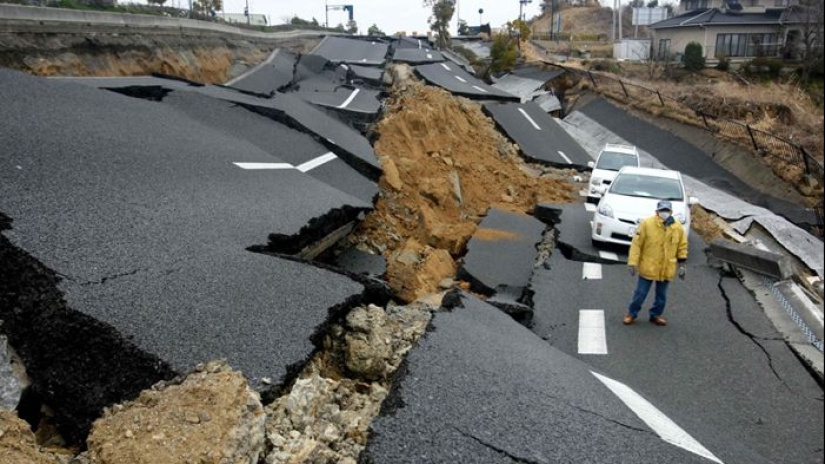
The intensity of earthquakes, depending on its consequences and impact on a person, can be assessed in different countries in their own way. One of the early scales, developed by the Italian Michele Stefano de Rossi and the Swiss Francois-Alphonse Forel, was used until the end of the XIX century, in this system, fluctuations from microscopic to extremely strong were distributed among classes. In 1902, they began to use the Mercalli earthquake intensity scale, named after the Italian volcanologist Giuseppe Mercalli, whose work served as the basis for further development of the scale, later this system was improved by Charles Richter.
The modified Mercalli scale-MM-i is still used in the United States to determine the intensity of shocks from damage in the absence of data on specialized devices. The 12-point scale uses Roman numerals, the degree of I is completely not felt by a person, and the XII corresponds to the almost complete destruction of infrastructure and violation of the horizon lines.

Giuseppe Mercalli

In 1964, a new 12-point scale was published, which was worked on by the Soviet geophysicist Sergei Medvedev, Wilhelm Speunher from the GDR and Vit Koarnik from the Czech Republic. Developed on the basis of the classical Mercalli scale, the new system has long been widely used in Europe, the degrees of intensity are also indicated by Roman numerals: from I -" Not felt" to XII - "A strong catastrophe".
In 1998, European countries adopted a new European Macroseismic Scale. The European Seismological Commission decided to revise the outdated Medvedev-Sponheuer-Karnik scale in 1988, and the result of their many years of research and careful testing was the first scale that not only determines the degree of intensity of tremors by destruction, but also contains various classifications of buildings and materials depending on their vulnerability, as well as explanations regarding the potential scale of destruction depending on the intensity of the earthquake.
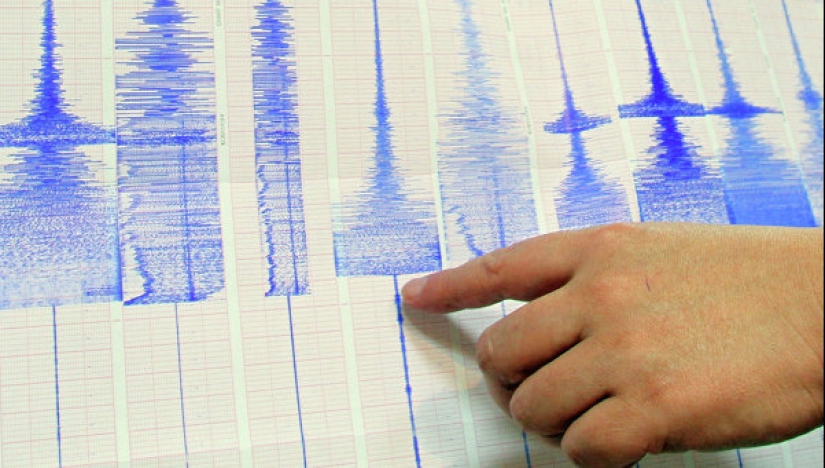
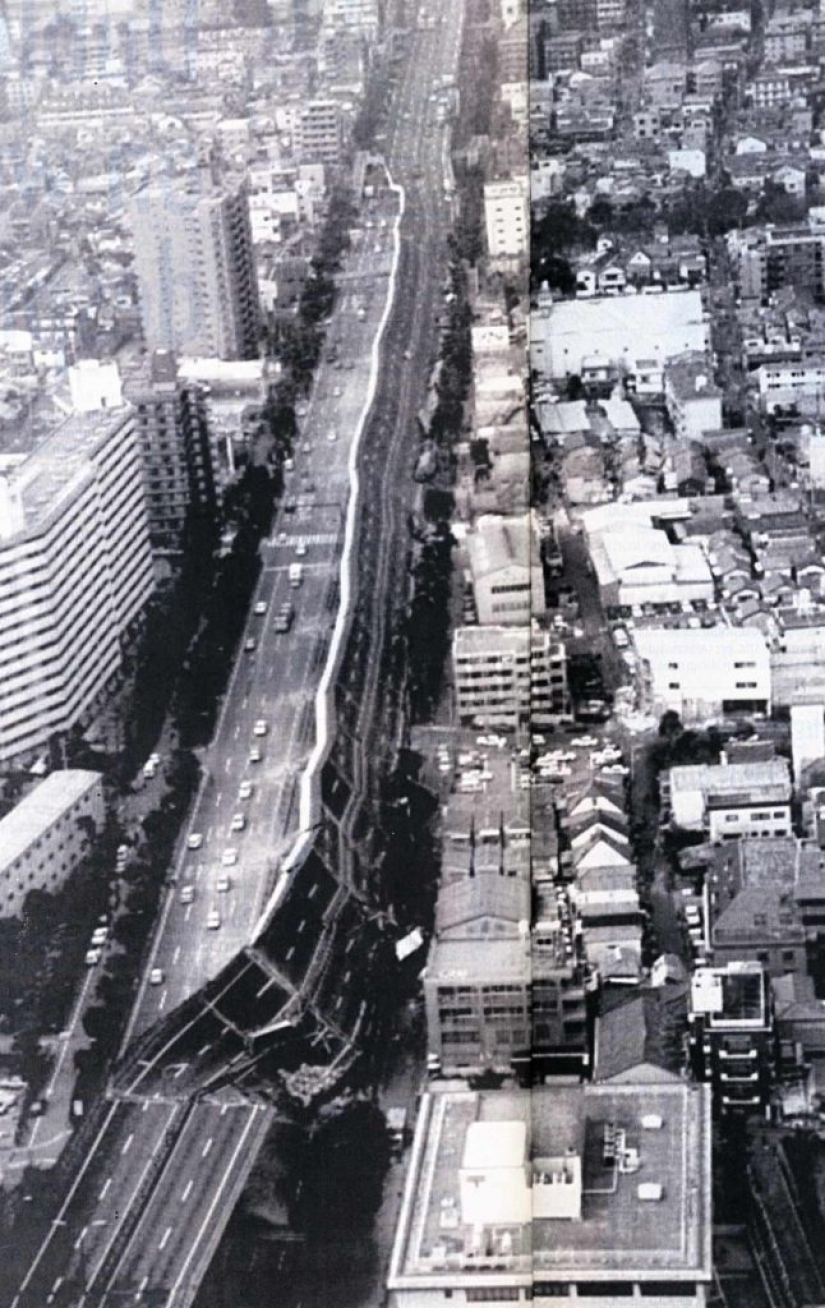
The scales mentioned above are universal and interchangeable, but the scale of the Japan Meteorological Agency was developed taking into account the seismological features of the Japanese archipelago and its "fellow misfortunes". The scale determines the intensity of aftershocks from 0 to 7 according to the following criteria: the well-being and perception of what is happening by people, the situation inside the premises and on the street. There are 10 degrees in the scale, which are called shindo, since the 5th and 6th categories are divided into weak and strong. The Japanese system also specifies the kinematic parameters of the Earth's crust oscillation, that is, the peak acceleration of the ground, 0 shindo corresponds to an acceleration of 0.008 m/s2, and shindo 7 – more than 4 m/s2.
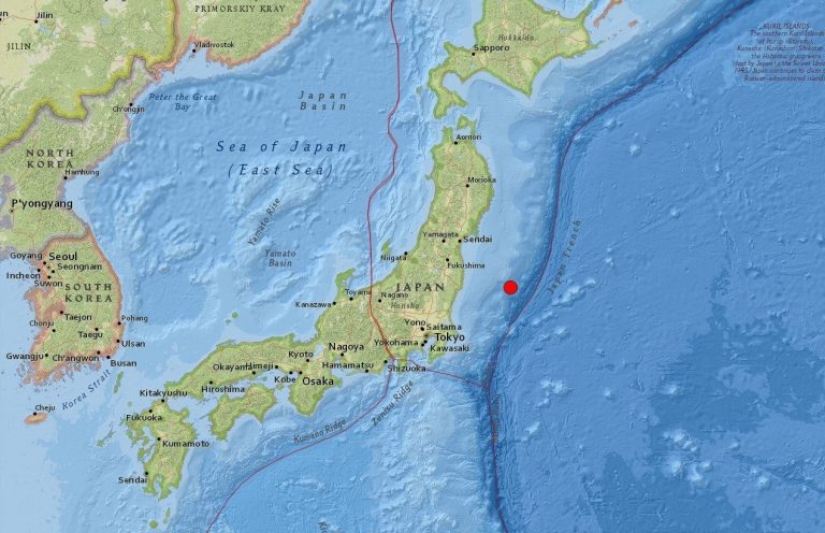

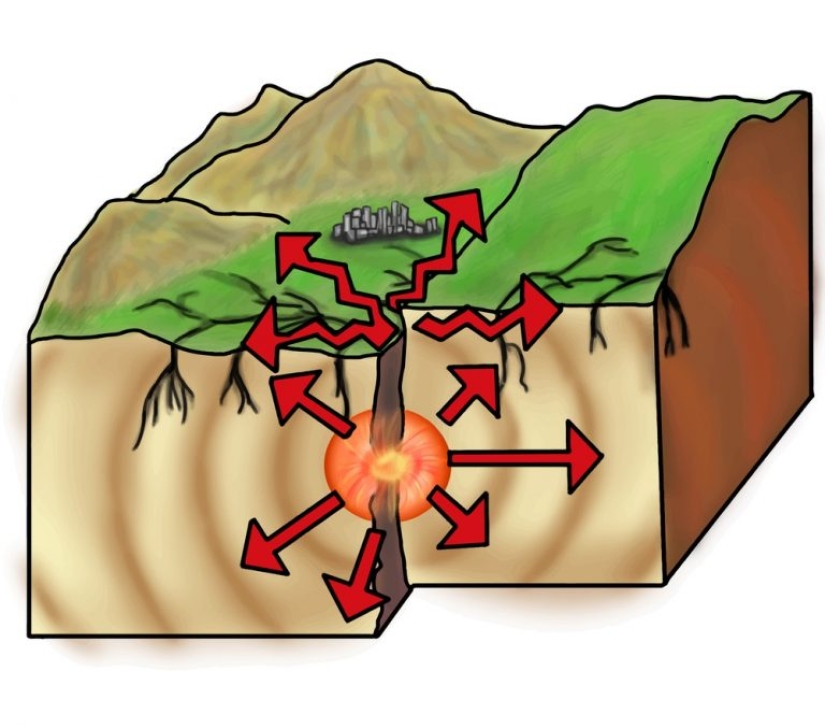
Every year, millions of earthquakes are registered on our planet, and quite often media reports about the magnitude or intensity are confusing due to incorrect presentation of information. Although the magnitude and intensity of an earthquake are different things, there is a connection between them: the conditional amount of energy released during an earthquake can be displayed differently on the surface depending on the depth of its focus. Aftershocks with a sufficiently high magnitude may practically not appear on the surface if the focus is located at a great depth.
If you are interested in the topic of earthquakes, you will probably be interested in learning about the strongest earthquakes over the past 100 years, as a result of which Armenia, the United States, Japan, China, Chile and other countries were affected.
Keywords: Science | History | World | Earthquake | Force | Interesting
Recent articles

It's high time to admit that this whole hipster idea has gone too far. The concept has become so popular that even restaurants have ...

There is a perception that people only use 10% of their brain potential. But the heroes of our review, apparently, found a way to ...
Related articles

In the fall of 1972, Bill Yates traveled through the countryside in the vicinity of Tampa, Florida. At that time, he was studying ...

When a person is in a life-threatening situation is awful, but even worse when it happens to a child. 11-year-old American Terry ...

Remember how broke the "unbreakable" scoop? The photo preserved in the photo album of almost every family! A selection of vintage ...
New Year's is a time to surprise and delight loved ones not only with gifts but also with a unique presentation of the holiday ...