
Honor is more precious than life: how the samurai in Japan did hara-kiri
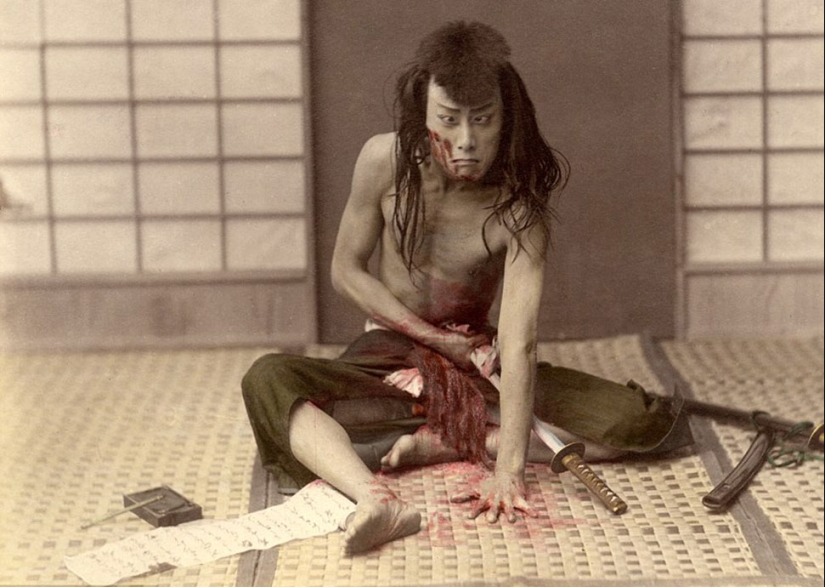
A stunning series of vintage photos shows the life of Japanese samurai 130 years ago. Among the pictures there are also those that depict the hara-kiri ritual, aka seppuku. It was used by soldiers who wanted to die with honor, either voluntarily, or when they were captured by the enemy.
The ceremonial emptying of the intestines was actually part of a more complex ritual and was performed in the presence of the audience. In one of the pictures, a young samurai pierces his stomach with a katana.

Warriors watch the hara-kiri of a samurai in white.
Samurai appeared in the Heian period around 710 AD with the aim of subjugating the locals in the Tohoku region in the northern part of Honshu Island. Over time, they became more and more powerful and became the military elite in Japan. They were the ruling class from the XII to the XIX century.

A samurai makes himself hara-kiri, or seppuku, a ritual of suicide by releasing intestines.
The samurai followed a code formed under the influence of Confucianism, which is known as Bushido — literally "the way of the warrior". The unwritten and unspoken code glorified modesty, loyalty, mastery of martial arts and honor until death. The rules also called the samurai to heroic courage, fierce defense of family pride and selfless devotion to the master.

A group of samurai in ancient armor and with weapons, around 1870.
In the XV and XVI centuries, there were many warring factions, but later their number decreased. The fearless warriors wore plate armor and a variety of weapons, including a bow and arrow, spears, rifles and, of course, a samurai sword. However, in the Edo period, peace was maintained, and many samurai became teachers, artists or officials, since the need to master martial arts had lost its primary importance.

A picture taken and colored by Felice Beato: women in a traditional Japanese shop, the end of the XIX century.
When Emperor Meiji ascended to the throne in 1868, he began to abolish the powers of the samurai. At first, he deprived them of the right to be the only army in Japan and from 1873 began to form a Western-style conscription army.

One of the first military photographers, the Venetian Felice Beato took this picture around 1862.
The samurai became Shizoku, united with another social class under the influence of the Meiji reforms, and the right to wear a katana was lost, as was the right to execute anyone who publicly showed disrespect to a samurai.
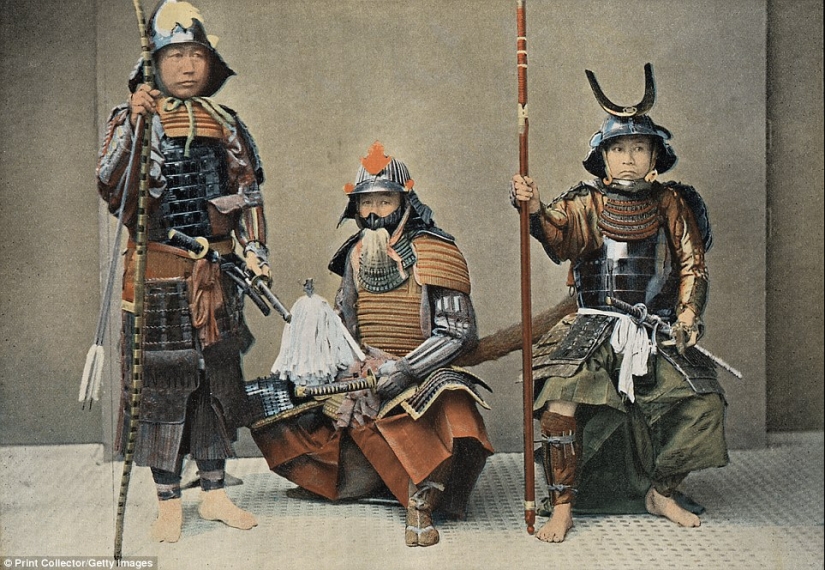
A group of samurai, circa 1890. Illustration for the booklet "In Japan: types, costumes and customs".
The term "shizoku" (untitled nobility) remained a part of Japanese culture until the end of World War II, but it was abandoned in 1947. Despite the fact that at the peak of their heyday, samurai made up no more than 10% of the population of Japan, their influence is still very noticeable in Japanese culture, especially in modern martial arts.

A samurai in a traditional outfit and shoes blows into a seashell.
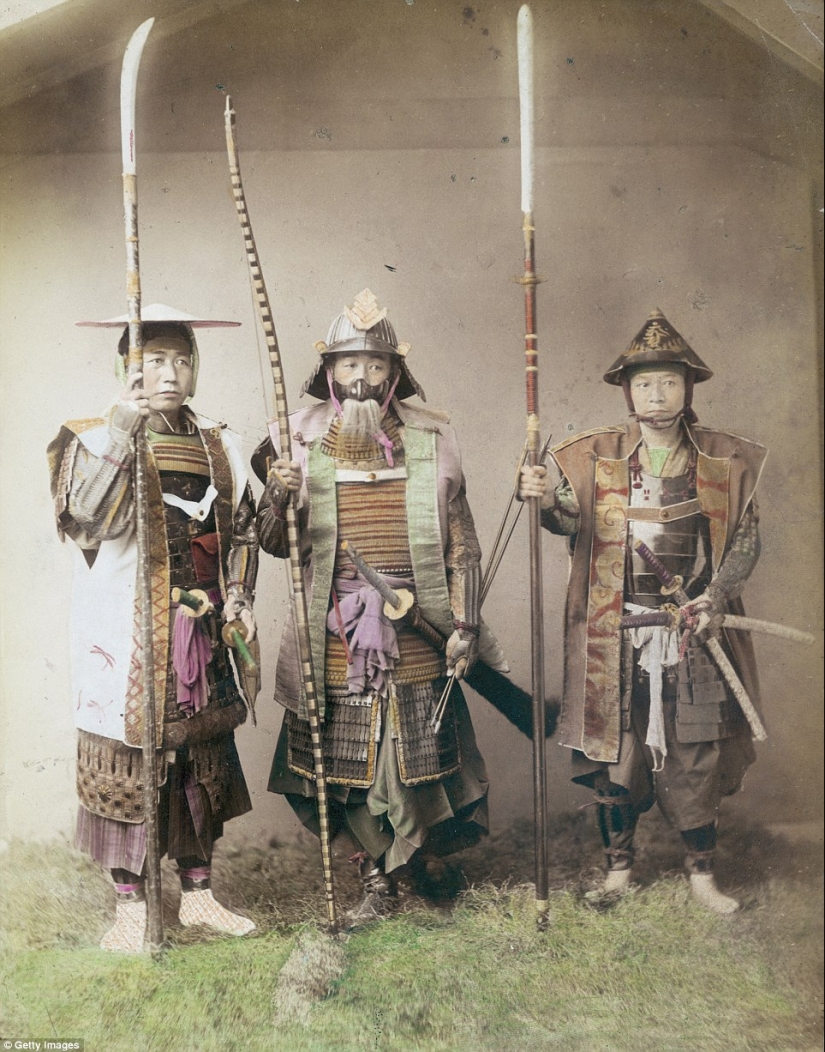
Three Japanese samurai in full uniform.
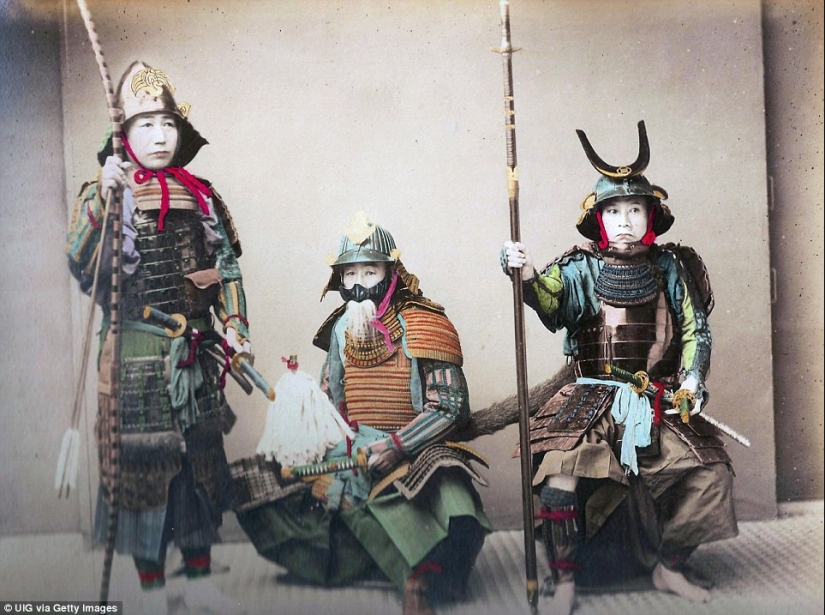
Bright traditional armor and ancient weapons on samurai, around 1890.
Keywords: Asia | Japan | History | Traditions | Retro | Suicide | Japanese | Honor | Retro photos | XIX century | 18+ | Tin | Samurai
Post News ArticleRecent articles

It's high time to admit that this whole hipster idea has gone too far. The concept has become so popular that even restaurants have ...

There is a perception that people only use 10% of their brain potential. But the heroes of our review, apparently, found a way to ...
Related articles

In the fall of 1972, Bill Yates traveled through the countryside in the vicinity of Tampa, Florida. At that time, he was studying ...

When a person is in a life-threatening situation is awful, but even worse when it happens to a child. 11-year-old American Terry ...

Remember how broke the "unbreakable" scoop? The photo preserved in the photo album of almost every family! A selection of vintage ...
New Year's is a time to surprise and delight loved ones not only with gifts but also with a unique presentation of the holiday ...