
Hirosimites – amazing artifacts created by a nuclear explosion
Categories: Asia | History | Science
By Pictolic https://mail.pictolic.com/article/hirosimites-amazing-artifacts-created-by-a-nuclear-explosion.htmlThe nuclear bombing of the Japanese cities of Hiroshima and Nagasaki is a terrible tragedy for all mankind. The consequences of a nuclear strike have left an indelible mark on the culture, ecology and politics of our planet. There were also geological traces, such as unique glass formations in the sand of the affected cities, called "Hirosimites".
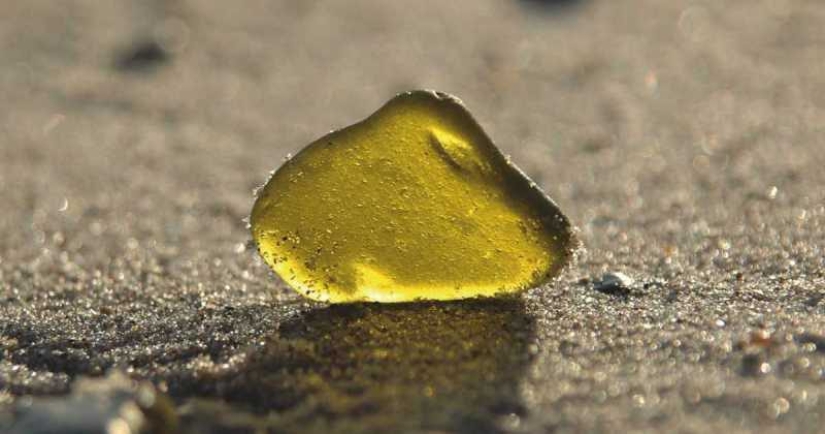
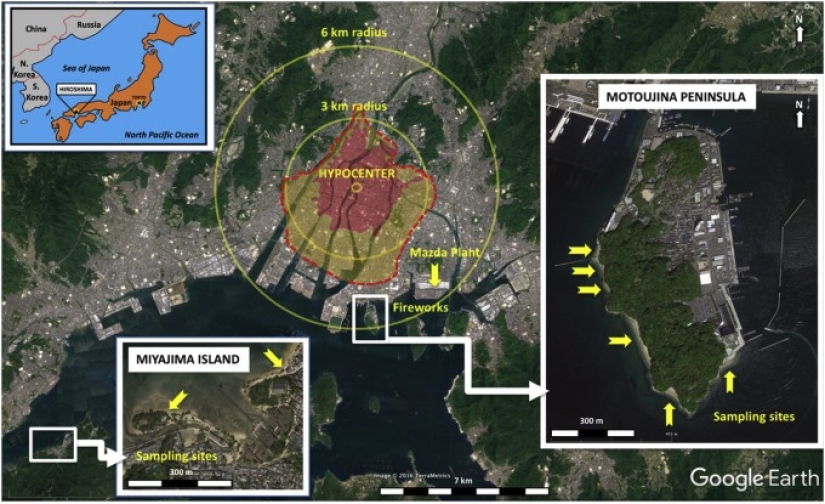
The first to find hirosimites was geologist Mario Vanier, who explored the sandy beaches of the Motujina Peninsula, near Hiroshima. During the sifting of sand, he was surprised to find unusual inclusions of the correct shape, which theoretically should not have been in this region. The glass particles characteristic of places with active volcanic activity were numerous and diverse.
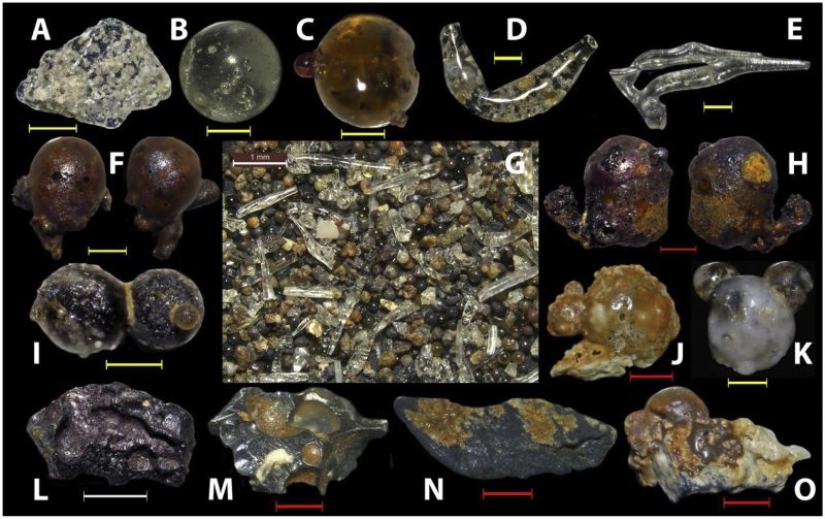
Having collected a sufficient number of samples, Vanier delivered them to the laboratory of the University of California, Berkeley, in order to learn as much as possible about the nature of glass beads. The result was unexpected — the objects found in the sand on the beaches and shoals of Motujina were born in the flame of a nuclear explosion back in 1945.
Further studies of the phenomenon showed that hirosimites occur within a radius of 30 km from the epicenter of the explosion. It was also experimentally established that in order for the sand to sinter into the glass of such a structure, a temperature of at least 1800 degrees Celsius is needed. Therefore, glass balls can only be products of volcanic activity or the result of a nuclear explosion.
As we have already said, most hirosimites have a regular spherical shape. They acquired it due to the fact that the explosion lifted tons of rock into the air and heated them to a liquid state. Sinking to the ground, the molten sand cooled, turning into glass balls.
This is reminiscent of the technology known for a long time for the manufacture of lead bullets, when molten metal was dripped into water from a great height, as a result of which it solidified in the form of balls of almost perfect spherical shape.
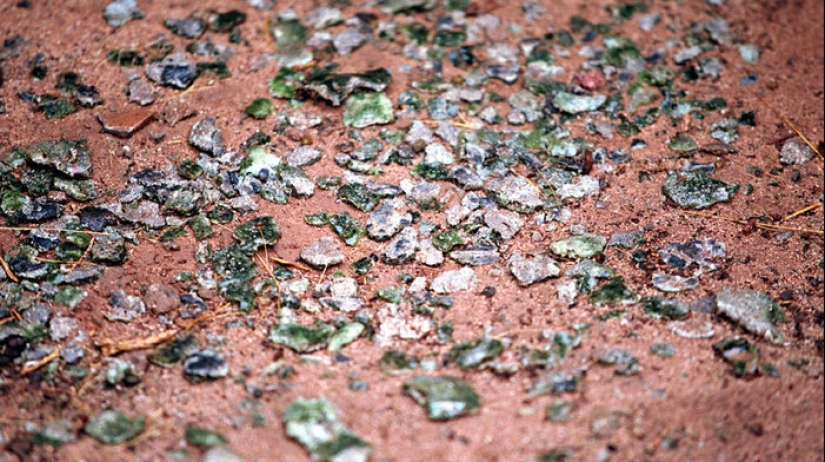
Vanye and his university colleagues discovered another important and eerie property of Hirosimites. The analysis showed that the glass bodies contain the smallest foreign inclusions of a very different nature. Particles of concrete, marble, rubber, metals and organic substances were present in most of the samples studied. The particles of the one that died in the nuclear fire of Hiroshima were preserved in the Hiroshima.
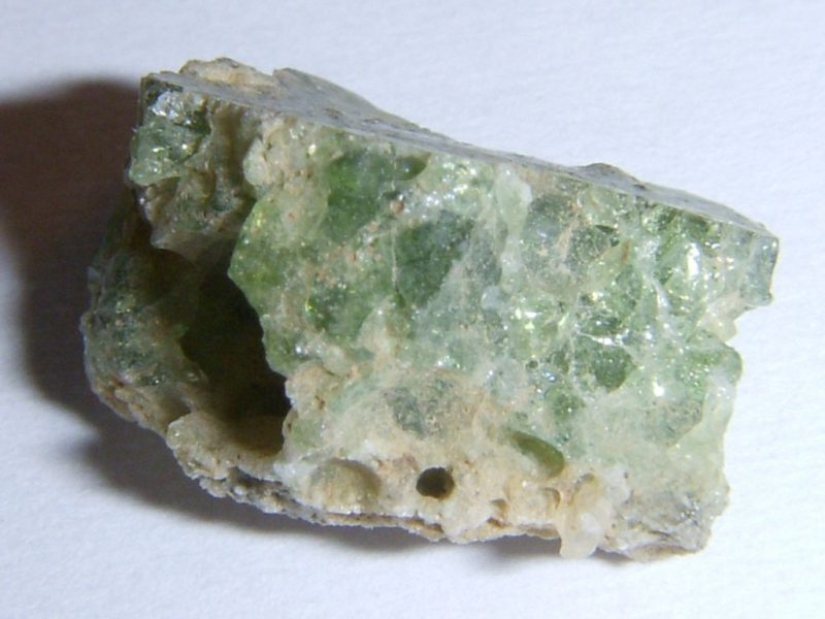
Berkeley believes that similar formations should be in the sand of the city of Nagasaki, also affected by the bombing. Scientists have been finding similar glass particles for a long time in the states of Nevada and New Mexico, not far from the landfills where the US government is testing nuclear weapons. They were named "trinity", in honor of the Trinity nuclear program. In addition, sometimes they can be found where a lightning bolt hit the sandy shore.
Recent articles

It's high time to admit that this whole hipster idea has gone too far. The concept has become so popular that even restaurants have ...

There is a perception that people only use 10% of their brain potential. But the heroes of our review, apparently, found a way to ...
New Year's is a time to surprise and delight loved ones not only with gifts but also with a unique presentation of the holiday ...